
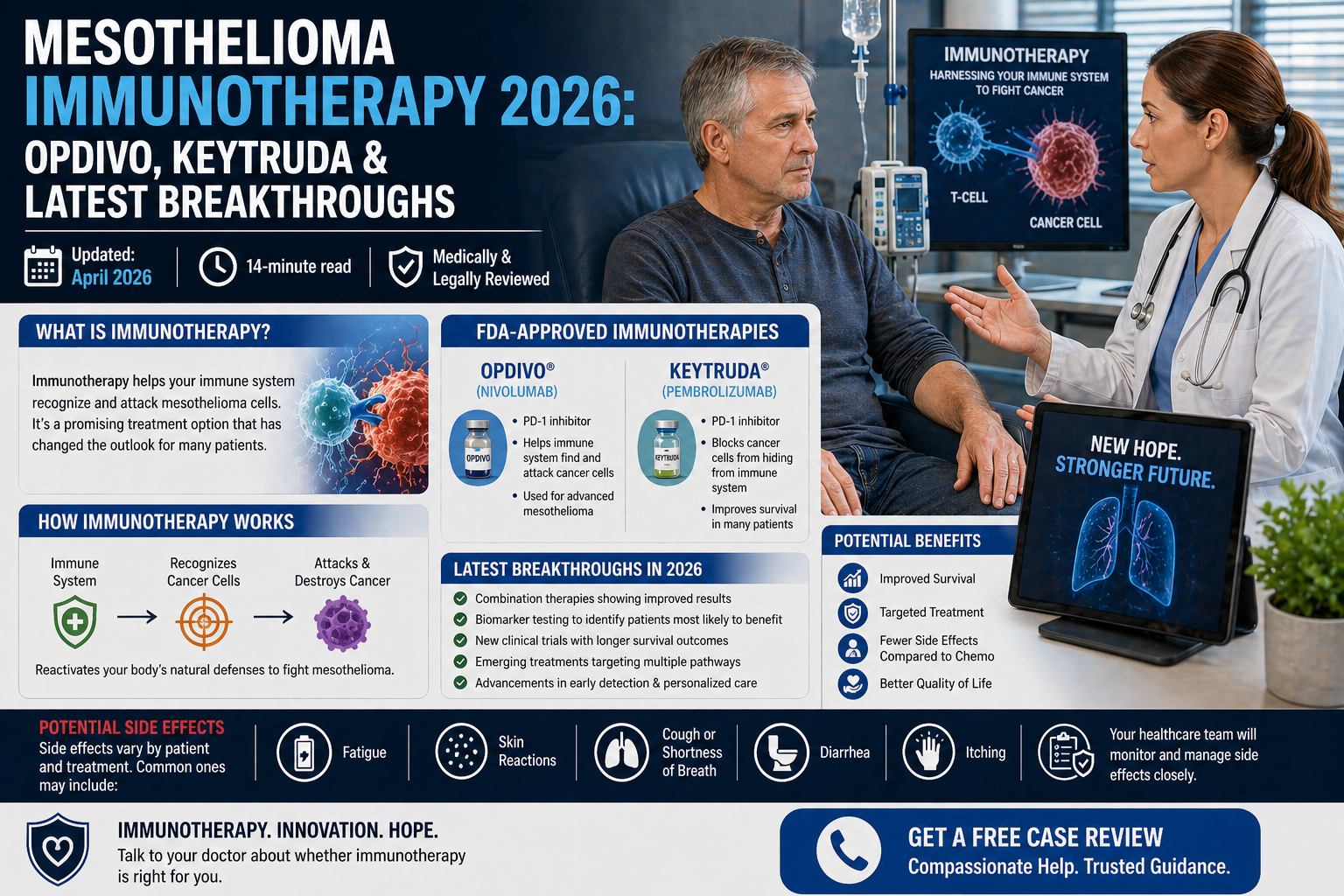
📅 Updated: April 2026 | ⏱ 14-minute read | ✅ Medically & Legally Reviewed
Introduction
In October 2020, the FDA approved nivolumab + ipilimumab (Opdivo + Yervoy) for mesothelioma, the first new treatment approval for this disease in 16 years. It was not a modest advance. The CheckMate 743 trial that supported that approval showed something the mesothelioma world had rarely seen: patients who appeared to plateau on their survival curve, alive and stable years after starting treatment.
In March 2026, five-year data from that same trial confirmed what early signals suggested: 14% of patients on immunotherapy were still alive at five years, compared to just 6% on standard chemotherapy. For non-epithelioid mesothelioma specifically, the difference was even more dramatic, 12% alive at five years with immunotherapy versus 1% with chemotherapy.
These are not incremental improvements. They represent a category shift, from a disease where long-term survival was a medical curiosity to one where a meaningful percentage of patients can realistically plan years ahead.
This guide covers the complete picture of mesothelioma immunotherapy in 2026: how it works, what drugs are approved, what the five-year data actually says, who qualifies, what side effects look like, what’s coming next, and how immunotherapy costs are covered through legal compensation.
How Immunotherapy Works, The Core Concept
To understand why immunotherapy has changed mesothelioma treatment, you need to understand one key concept: immune checkpoints.
The immune system is extraordinarily powerful, it identifies and destroys abnormal cells constantly. Cancer cells survive not because they’re invisible to the immune system, but because they’ve learned to exploit the immune system’s own “off switches.”
These off switches are called immune checkpoints, proteins on the surface of immune cells and cancer cells that, under normal circumstances, prevent the immune system from attacking healthy tissue. The two most important checkpoints in mesothelioma are:
| Checkpoint | Normal Function | How Cancer Exploits It |
|---|---|---|
| PD-1 / PD-L1 | Prevents immune cells from attacking normal cells | Mesothelioma cells overexpress PD-L1, sending a “don’t attack me” signal to T-cells |
| CTLA-4 | Dampens T-cell activation in lymph nodes | Mesothelioma creates an immunosuppressive environment that overstimulates this brake |
Checkpoint inhibitors, the class of drugs that includes Opdivo and Keytruda, work by blocking these checkpoints, releasing the immune system’s brakes and allowing T-cells to recognize and attack mesothelioma cells.
The result, in responding patients, is an immune-mediated attack on the tumor that can be more durable than chemotherapy, because it leverages the body’s own adaptive immune system rather than a fixed drug dose.
FDA-Approved Mesothelioma Immunotherapy, 2026
Treatment 1: Nivolumab + Ipilimumab (Opdivo + Yervoy), FDA Approved October 2020
Nivolumab (Opdivo), manufactured by Bristol Myers Squibb, is a PD-1 checkpoint inhibitor. It blocks the PD-1 receptor on T-cells, preventing mesothelioma cells from sending the “don’t attack” signal.
Ipilimumab (Yervoy), also by Bristol Myers Squibb, is a CTLA-4 checkpoint inhibitor. It removes a second brake on T-cell activation, amplifying the immune response further.
Together, these two drugs work through complementary mechanisms, which is why their combination is significantly more effective than either drug alone.
FDA Approval Basis: CheckMate 743 Phase III trial, the largest and most definitive immunotherapy trial ever conducted in mesothelioma.
Treatment Schedule:
- Nivolumab: 360 mg IV every 3 weeks
- Ipilimumab: 1 mg/kg IV every 6 weeks
- Administration: Both given on the same day, every 3 weeks / 6 weeks cycle
- Duration: Up to 2 years of treatment (or until disease progression or unacceptable toxicity)
The CheckMate 743 Five-Year Data, March 2026
The March 2026 publication of five-year follow-up data from CheckMate 743 in the Journal of Clinical Oncology represents the most important mesothelioma immunotherapy dataset ever published.
Trial Design:
- 605 patients with unresectable pleural mesothelioma
- No prior systemic therapy
- Randomized: nivolumab + ipilimumab vs. pemetrexed + cisplatin/carboplatin (standard chemotherapy)
- All mesothelioma subtypes included, including sarcomatoid, historically the hardest to treat
Five-Year Results (March 2026):
| Metric | Nivolumab + Ipilimumab | Chemotherapy |
|---|---|---|
| 5-year overall survival rate | 14% | 6% |
| Median overall survival | 18.1 months | 14.1 months |
| 1-year survival rate | 73% | 60% |
| 2-year survival rate | 41% | 27% |
| Non-epithelioid 5-year survival | 12% | 1% |
| Epithelioid 5-year survival | 15% | 8% |
| Minimum follow-up | 59.3 months | 59.3 months |
Source: Baas P, Scherpereel A, et al. Journal of Clinical Oncology, March 2026
What these numbers mean in human terms:
Every mesothelioma oncologist knows what the pre-2020 chemotherapy survival curve looked like, a steady, predictable decline. The CheckMate 743 immunotherapy curve is fundamentally different. It starts declining like chemotherapy, then, around month 18–24, it flattens. A plateau forms. And patients in that plateau stay there.
The 14% who are alive at five years are not hanging on, many are in stable remission with manageable or no active disease. This is the immunotherapy story that no chemotherapy curve could tell.
“The 5-year results continue to show an overall survival benefit with first-line nivolumab plus ipilimumab vs chemotherapy in unresectable pleural mesothelioma across subgroups.”
, Baas et al., Journal of Clinical Oncology, March 2026
Treatment 2: Pembrolizumab + Pemetrexed + Platinum (Keytruda + Chemo), FDA Approved October 2025
Pembrolizumab (Keytruda), manufactured by Merck, is a PD-1 checkpoint inhibitor with a slightly different binding profile than nivolumab. It was FDA-approved in combination with pemetrexed and a platinum chemotherapy drug in October 2025, based on results from the KEYNOTE-483 Phase III trial.
KEYNOTE-483 Results:
| Metric | Pembrolizumab + Chemo | Chemotherapy Alone |
|---|---|---|
| Median Overall Survival | 17.3 months | 16.1 months |
| Median PFS | 7.1 months | 7.0 months |
| Objective Response Rate | 56.7% | 48.1% |
| 12-month OS rate | ~68% | ~63% |
Source: FDA approval documentation, October 2025; KEYNOTE-483 Phase III full results
Treatment Schedule:
- Pembrolizumab: 200 mg IV every 3 weeks
- Pemetrexed: Standard dosing every 3 weeks
- Cisplatin or carboplatin: Standard dosing every 3 weeks
- Duration: Up to 35 cycles of pembrolizumab (approximately 2 years)
Who is this approved for?
Unresectable, advanced, or metastatic malignant pleural mesothelioma, first-line treatment, all histologic subtypes.
Key difference from nivolumab + ipilimumab:
KEYNOTE-483 adds pembrolizumab to standard chemotherapy, keeping the established pemetrexed + platinum backbone and adding immune activation on top. CheckMate 743 replaces chemotherapy entirely with dual immunotherapy. Different mechanisms, different patient profiles, and now both are FDA-approved options.
Nivolumab vs. Pembrolizumab, How to Choose in 2026
Both drugs target PD-1. Both are FDA-approved for mesothelioma. How do oncologists choose?
| Factor | Nivolumab + Ipilimumab | Pembrolizumab + Chemo |
|---|---|---|
| Chemo included? | ❌ No, immunotherapy only | ✅ Yes, chemo + immuno |
| FDA approval | October 2020 | October 2025 |
| Best for cell type | Non-epithelioid (strongest benefit) | All types, including epithelioid |
| 5-year survival (non-epithelioid) | 12% | Not yet published at 5 years |
| Response rate | ~40% | 57% (higher) |
| Median survival | 18.1 months | 17.3 months |
| Side effect profile | Immune-related (colitis, hepatitis, endocrinopathy) | Immune + chemo toxicity |
| ASCO 2024 guideline | Preferred for non-epithelioid | Option for epithelioid |
Bottom line from the 2024 ASCO guidelines:
- Non-epithelioid mesothelioma → Nivolumab + ipilimumab is the preferred first-line choice
- Epithelioid mesothelioma → Genuine choice between nivolumab + ipilimumab, chemotherapy alone, or pembrolizumab + chemotherapy, individualized based on patient factors
This decision should be made with a mesothelioma oncologist, not a general oncologist, who understands the nuances of both datasets and your specific case.
PD-L1 Expression, Does It Predict Response?
One of the most frequently asked questions about immunotherapy eligibility is whether PD-L1 expression (a biomarker measured from the tumor biopsy) predicts whether a patient will respond.
For mesothelioma specifically, the answer is nuanced:
CheckMate 743 (nivolumab + ipilimumab):
- The survival benefit was seen regardless of PD-L1 expression level
- Patients with PD-L1 ≥1% showed benefit, but so did patients with PD-L1 <1%
- PD-L1 testing is informative but not required for eligibility
KEYNOTE-483 (pembrolizumab + chemo):
- Similar findings, benefit across PD-L1 subgroups
- PD-L1 did not emerge as a clear predictive biomarker in this trial either
What this means for patients: Unlike some lung cancer immunotherapy protocols where PD-L1 testing gates access to treatment, mesothelioma immunotherapy is available regardless of your tumor’s PD-L1 status. You do not need a specific biomarker result to be eligible.
Cell Type and Immunotherapy, Why It Matters
The single most important factor determining immunotherapy benefit in mesothelioma is histologic cell type:
| Cell Type | Immunotherapy Benefit | Standard Approach |
|---|---|---|
| Non-epithelioid (sarcomatoid + biphasic) | Dramatic, 12x improvement in 5-year survival vs. chemo | Nivolumab + ipilimumab strongly preferred |
| Epithelioid | Meaningful, 2x improvement in 5-year survival vs. chemo | Choice between nivolumab + ipilimumab, chemo, or pembrolizumab + chemo |
Why does non-epithelioid benefit more?
Historically, sarcomatoid and biphasic mesothelioma were the most lethal subtypes, responding poorly to chemotherapy and carrying median survival under 8–10 months. Immunotherapy has produced the biggest relative improvement in these subtypes specifically:
- Non-epithelioid 5-year survival with immunotherapy: 12%
- Non-epithelioid 5-year survival with chemotherapy: 1%
A patient with sarcomatoid mesothelioma who once had essentially no hope of surviving two years now has a 12% chance of being alive at five years. This is perhaps the most profound benefit immunotherapy has delivered to any mesothelioma patient population.
Who Is Eligible for Mesothelioma Immunotherapy?
General Eligibility for Nivolumab + Ipilimumab
| Criteria | Requirement |
|---|---|
| Diagnosis | Confirmed unresectable pleural mesothelioma |
| Prior treatment | No prior systemic therapy (first-line) |
| Performance status | ECOG 0–1 generally; some patients with ECOG 2 evaluated individually |
| Organ function | Adequate liver, kidney, lung, and cardiac function |
| Autoimmune disease | No active, serious autoimmune condition requiring systemic treatment |
| Steroids | No systemic corticosteroids >10mg prednisone equivalent daily |
| Organ transplant history | Prior solid organ or stem cell transplant generally excludes |
Who Should Not Receive Immunotherapy
Immunotherapy is not appropriate for patients with:
- Active autoimmune diseases (lupus, rheumatoid arthritis, Crohn’s, ulcerative colitis, multiple sclerosis in active flare)
- Active interstitial lung disease
- Recent solid organ transplant (immunotherapy can trigger rejection)
- Ongoing systemic corticosteroid use at immunosuppressive doses
- Certain prior immunotherapy-related severe toxicities
These exclusions are carefully assessed during pre-treatment evaluation. Many patients with “managed” autoimmune conditions have successfully received immunotherapy with close monitoring, this requires specialist judgment.
Mesothelioma Immunotherapy Side Effects, The Complete Guide
Immunotherapy side effects are fundamentally different from chemotherapy side effects. They are immune-mediated, caused by the activated immune system attacking not just cancer cells but occasionally normal tissues as well.
These side effects are called irAEs (immune-related adverse events).
Most Common Immunotherapy Side Effects
| Side Effect | Frequency | Grade 3–4 Rate | Management |
|---|---|---|---|
| Fatigue | Very common (50%+) | ~5% | Rest; activity pacing; rule out thyroid dysfunction |
| Skin rash / pruritus | Common (30–40%) | ~3% | Topical corticosteroids; oral antihistamines; systemic steroids if severe |
| Diarrhea / colitis | Common (20–30%) | ~7% | Hydration; oral corticosteroids; IV steroids + infliximab for severe colitis |
| Hepatitis (liver inflammation) | Occasional (10–15%) | ~6% | Liver function monitoring; systemic steroids; hold immunotherapy |
| Hypothyroidism | Common (15–20%) | Rare | Thyroid hormone replacement; usually permanent but manageable |
| Hyperthyroidism | Occasional (5–8%) | Rare | Beta-blockers; thyroid monitoring; usually resolves |
| Pneumonitis (lung inflammation) | Occasional (5–10%) | ~4% | Hold immunotherapy; systemic corticosteroids; most resolve |
| Hypophysitis (pituitary inflammation) | Occasional (ipilimumab) | ~2% | Hormone replacement; systemic corticosteroids |
| Adrenal insufficiency | Occasional | ~2% | Steroid replacement, often permanent |
| Nephritis (kidney inflammation) | Rare (1–3%) | ~2% | Hold immunotherapy; corticosteroids |
| Neurotoxicity | Rare (<1%) | <1% | Specialist neurology input; immunosuppression |
The Critical Difference From Chemotherapy Side Effects
The most important principle in managing immunotherapy side effects: report any new symptom immediately, don’t wait for your next appointment.
Unlike chemotherapy side effects that follow a predictable timeline (nausea days 1–3, fatigue peaks day 5–7), immunotherapy side effects can appear at any time, week 1, month 6, or after treatment has ended. Early recognition and treatment prevents most serious outcomes.
The 2026 management protocol:
| Severity Grade | Action |
|---|---|
| Grade 1 (mild) | Continue immunotherapy; close monitoring; symptomatic treatment |
| Grade 2 (moderate) | Hold immunotherapy; start oral corticosteroids; specialist evaluation |
| Grade 3 (severe) | Permanently or temporarily discontinue; high-dose IV corticosteroids; hospitalization if needed |
| Grade 4 (life-threatening) | Permanently discontinue; immediate hospitalization; IV corticosteroids + immunosuppressants |
With proper management, most grade 2–3 irAEs resolve completely. The key is not delaying treatment of these side effects, a colitis or pneumonitis that starts as grade 2 and is ignored can progress to grade 3–4 within days.
Comparing Immunotherapy Side Effects vs. Chemotherapy Side Effects
| Side Effect | Immunotherapy | Chemotherapy |
|---|---|---|
| Nausea/vomiting | Rare | Very common |
| Hair loss | Rare | Occasional |
| Fatigue | Common | Very common |
| Rash | Common | Occasional |
| Diarrhea/colitis | Moderate risk | Occasional |
| Thyroid dysfunction | Common (usually manageable) | Rare |
| Kidney toxicity | Rare | Common with cisplatin |
| Neuropathy | Rare | Common with cisplatin |
| Bone marrow suppression | Rare | Very common |
| Autoimmune flares | Unique risk | Not applicable |
Many patients find immunotherapy significantly more tolerable than chemotherapy on a day-to-day basis, with fewer of the acute, immediately debilitating effects that chemotherapy produces. However, the immune-mediated side effects require vigilant monitoring and rapid response when they occur.
Immunotherapy Survival Rates, 2026 Complete Data
| Treatment | Median OS | 1-Year | 2-Year | 5-Year |
|---|---|---|---|---|
| Nivolumab + Ipilimumab (all patients) | 18.1 months | 73% | 41% | 14% |
| Nivolumab + Ipilimumab (non-epithelioid) | 18.1 months | ~68% | ~38% | 12% |
| Nivolumab + Ipilimumab (epithelioid) | 18.7 months | ~75% | ~42% | 15% |
| Pembrolizumab + Pemetrexed + Platinum | 17.3 months | ~68% | ~38% | Not yet reported |
| Chemotherapy alone | 14.1 months | 60% | 27% | 6% |
| Nivolumab + Chemo (INITIATE-2) | ~19.5 months | ~75% | ~43% | Pending |
Emerging Immunotherapy Approaches, What’s Coming After 2026
The FDA approvals of 2020 and 2025 are not the end of the immunotherapy story for mesothelioma, they’re the foundation. The next generation of immune-based treatments currently in active development includes:
Volrustomig (MEDI5752), Phase III Trial
A novel dual PD-1/CTLA-4 bispecific antibody, meaning a single molecule that blocks both checkpoints simultaneously (unlike nivolumab + ipilimumab, which are two separate drugs).
- Trial: Global Phase III, directly comparing Volrustomig + carboplatin + pemetrexed versus standard chemotherapy or nivolumab + ipilimumab
- Rationale: A single bispecific drug may achieve cleaner dual checkpoint blockade with potentially different safety or efficacy profile compared to two separate antibodies
- Status: Actively recruiting in multiple US states
Relatlimab + Nivolumab (LAG-3 + PD-1 Blockade)
A third checkpoint, LAG-3, has emerged as an important immunotherapy target. Adding LAG-3 inhibition to PD-1 blockade has shown dramatic results in melanoma. Mesothelioma trials exploring this combination are in early phase.
UV-1 Cancer Vaccine + Immunotherapy
As covered in our clinical trials guide, the UV-1 cancer vaccine (FDA Fast Track designated 2024) more than doubled response rates when added to nivolumab + ipilimumab in the NIPU Phase II trial:
- Response rate: 31% with UV-1 + immunotherapy vs. 16% without
- Median OS: 15.4 months vs. 11.1 months
- Phase III trial expected to launch, this could represent the next FDA approval for mesothelioma
Adoptive Cell Therapies
CAR T-cell therapy targeting mesothelin (a protein overexpressed on mesothelioma cells) represents the most potentially transformative immune-based approach beyond current checkpoint inhibitors. Early-phase trials at Penn Medicine are ongoing, with one documented case described by attorney Christopher Placitella as a “cure” using this approach.
Immunotherapy and Surgery, Can They Be Combined?
Yes, and this combination is now an active area of clinical investigation.
Neoadjuvant immunotherapy (before surgery):
The durvalumab + tremelimumab ± chemotherapy neoadjuvant trial at MD Anderson Cancer Center (active 2026) is directly testing whether dual immunotherapy before P/D surgery improves surgical outcomes and long-term survival.
Pembrolizumab + surgery + chemotherapy:
An active Phase II trial at Penn Medicine (Philadelphia) is evaluating pembrolizumab combined with image-guided surgery and chemotherapy for resectable pleural mesothelioma.
What the data suggests so far:
- Neoadjuvant immunotherapy can produce meaningful tumor shrinkage before surgery
- Some patients achieve pathologic complete responses (no viable tumor found at surgery), previously almost unheard of in mesothelioma
- Combining immunotherapy with surgery may deliver additive survival benefits, the data from ongoing trials will clarify this over the next 2–3 years
The Cost of Mesothelioma Immunotherapy, and How It’s Recovered
Immunotherapy drugs are among the most expensive cancer treatments ever developed:
| Drug | Cost Per Dose | Annual Cost |
|---|---|---|
| Nivolumab (Opdivo) | ~$7,000–$9,000 per dose (every 3 weeks) | ~$120,000–$160,000 |
| Ipilimumab (Yervoy) | ~$20,000–$25,000 per dose (every 6 weeks) | ~$80,000–$100,000 |
| Nivolumab + Ipilimumab (combined) | , | ~$200,000–$260,000/year |
| Pembrolizumab (Keytruda) | ~$10,000–$15,000 per dose (every 3 weeks) | ~$175,000–$220,000 |
| Pembrolizumab + Chemotherapy | , | ~$230,000–$300,000/year |
How These Costs Are Covered
Medicare Part B: Covers physician-administered immunotherapy under the Medicare Outpatient Prospective Payment System. Nivolumab + ipilimumab and pembrolizumab + chemotherapy are fully covered under their FDA approvals.
Commercial Insurance: All FDA-approved first-line immunotherapy regimens are covered by major commercial insurers, with prior authorization typically required.
Manufacturer Assistance:
- Bristol Myers Squibb (Opdivo + Yervoy): BMS Patient Assistance Foundation, free drugs for eligible uninsured/underinsured patients
- Merck (Keytruda): Merck Patient Assistance Program, income-based eligibility
Legal Compensation: Every immunotherapy cost is fully compensable in your asbestos lawsuit. Attorney documented treatment expenses as economic damages, these are recovered from manufacturers responsible for your exposure.
| Compensation Source | Amount |
|---|---|
| Personal Injury Lawsuit Settlement | $1M – $1.4M average |
| Trial Verdict | $5M – $11.4M average |
| Asbestos Trust Funds | $300K – $400K combined |
| VA Benefits (veterans) | $4,158+/month |
| Combined Total | $1.5M – $2M+ |
Questions to Ask Your Oncologist About Immunotherapy
Bring these to your consultation:
- Based on my cell type (epithelioid/non-epithelioid), which immunotherapy approach do you recommend, and why?
- Should I start with nivolumab + ipilimumab, pembrolizumab + chemotherapy, or chemotherapy alone?
- Am I a potential surgical candidate? If so, should immunotherapy come before or after surgery?
- What is my PD-L1 status, and does it change your recommendation?
- What clinical trials are currently open that might be relevant to my case?
- How will you monitor me for immune-related side effects, and what should I watch for at home?
- If immunotherapy stops working, what is the next step?
- Can I continue immunotherapy for the full 2 years if I’m responding well?
- Are there any active autoimmune conditions or medications that might affect my eligibility?
- Does this hospital have a mesothelioma multidisciplinary tumor board that will review my case?
Frequently Asked Questions
What is the best immunotherapy for mesothelioma in 2026?
For non-epithelioid (sarcomatoid/biphasic) mesothelioma, nivolumab + ipilimumab (Opdivo + Yervoy) is the ASCO-preferred first-line choice, delivering 12% 5-year survival vs. 1% with chemotherapy. For epithelioid mesothelioma, patients may choose between nivolumab + ipilimumab, chemotherapy alone, or pembrolizumab + pemetrexed + platinum, a decision made with a mesothelioma specialist based on individual factors.
How long does mesothelioma immunotherapy last?
Standard protocols allow up to 2 years (approximately 35 cycles for pembrolizumab; up to 24 months for nivolumab + ipilimumab). Patients who respond well typically continue the full 2 years. Some patients receive extended treatment beyond 2 years at their oncologist’s discretion.
What is the 5-year survival rate with mesothelioma immunotherapy?
Based on the March 2026 CheckMate 743 five-year data: 14% overall, 15% for epithelioid, and 12% for non-epithelioid, compared to just 6% with chemotherapy. The non-epithelioid improvement (12% vs. 1% with chemo) is one of the most dramatic advances in modern mesothelioma oncology.
Does immunotherapy have worse side effects than chemotherapy?
Different, not necessarily worse. Immunotherapy avoids most chemotherapy-specific side effects (severe nausea, hair loss, neuropathy, bone marrow suppression) but introduces immune-related side effects (colitis, hepatitis, thyroid dysfunction, pneumonitis). Many patients find immunotherapy more tolerable day-to-day, but immune side effects can be serious and require prompt attention.
Do I need to test PD-L1 before starting immunotherapy?
For mesothelioma, PD-L1 testing is informative but not required for eligibility. Both CheckMate 743 and KEYNOTE-483 showed benefit across PD-L1 subgroups, meaning patients with low or negative PD-L1 expression can still benefit significantly from immunotherapy.
Can I receive immunotherapy if I have an autoimmune condition?
Patients with active, severe autoimmune conditions requiring systemic immunosuppression are generally excluded. However, many patients with managed or mild autoimmune conditions have successfully received immunotherapy with close specialist monitoring. This requires careful individual assessment by a mesothelioma oncologist.
Does immunotherapy affect my legal compensation rights?
No. Your legal rights are completely unaffected by your treatment decisions. Immunotherapy costs, which can exceed $200,000 per year, are significant documented economic damages in your asbestos lawsuit, and can increase your total compensation. Your attorney pursues your claim simultaneously with your treatment, at zero upfront cost.
14% Alive at Five Years. That Number Changes Everything.
Before 2020, telling a mesothelioma patient that 14% of people in their situation would be alive five years later would have seemed impossible. Today, it’s a published clinical reality, verified by 59+ months of follow-up data from the largest mesothelioma trial ever conducted.
Immunotherapy has not cured mesothelioma. But it has, for the first time in the disease’s history, produced a durable survival tail. Patients who respond remain in stable remission for years. The immune system, once unleashed, can maintain control in a way that chemotherapy never could.
Your treatment options are broader than they have ever been. And your legal right to compensation for the disease that asbestos manufacturers caused, while knowing the consequences, is as strong as ever.
👉 Mesothelioma Chemotherapy 2026: Drugs, Side Effects & What to Expect
About the Author
Monica C. Loyola is a senior research editor at MesotheliomaLegalHelp.info with over eight years of experience covering legal and medical topics for digital health publications. He specializes in asbestos litigation, occupational disease, veterans’ benefits, and mesothelioma treatment research. Monica work is reviewed against current medical literature, legal precedent, and publicly available case data before publication. He holds a degree in journalism with a concentration in health and science writing.