
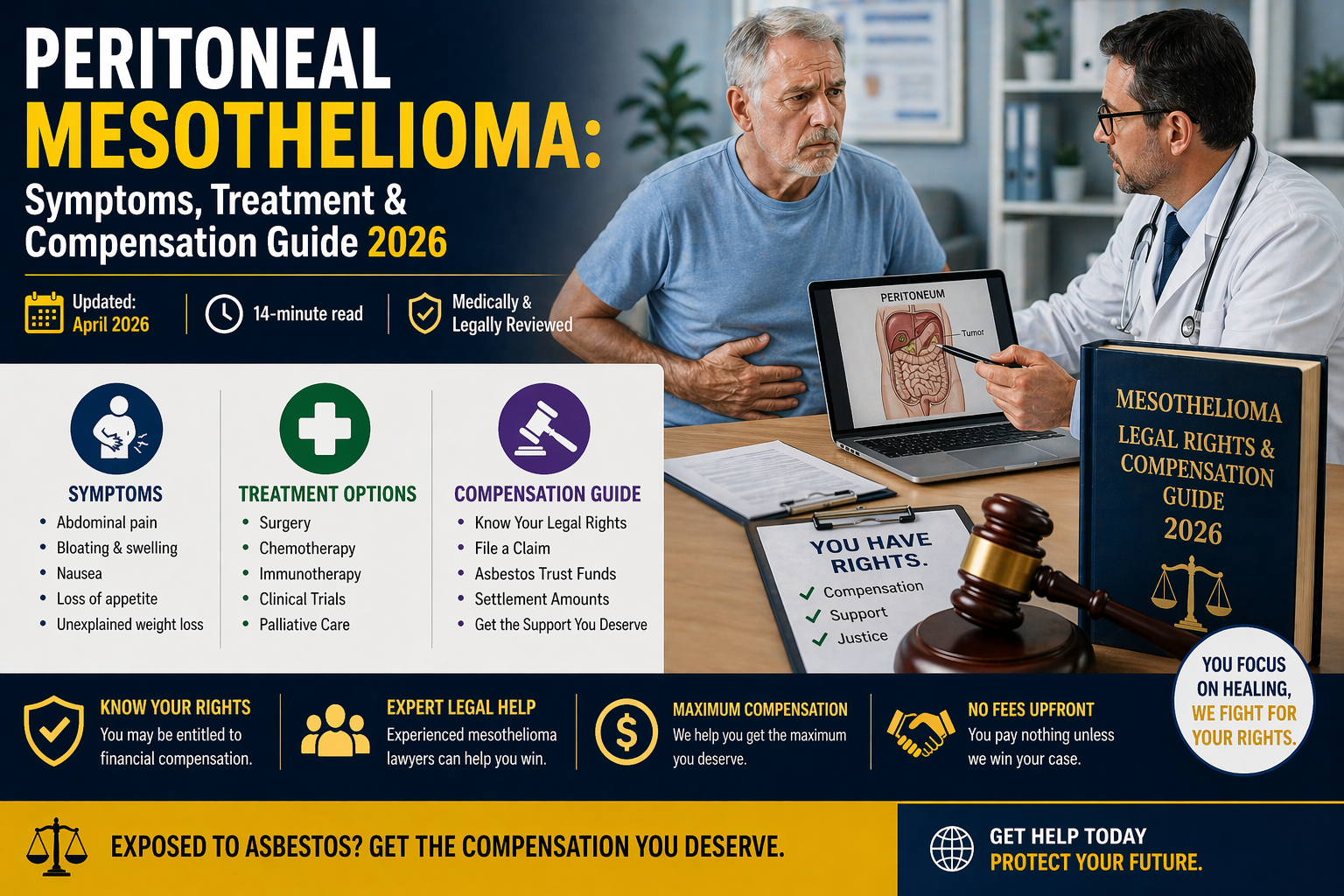
📅 Updated: April 2026 | ⏱ 14-minute read | ✅ Medically & Legally Reviewed
Introduction
Peritoneal mesothelioma is the second most common form of mesothelioma, and in many ways, it is the most hopeful.
While pleural mesothelioma has a median survival of 12–18 months, patients with peritoneal mesothelioma who receive the right treatment, cytoreductive surgery combined with HIPEC, are achieving median survival of 44–53 months, with 5-year survival rates exceeding 65% in optimal candidates. These are numbers that would have seemed impossible just 15 years ago for any form of mesothelioma.
But peritoneal mesothelioma is also the most frequently misdiagnosed form of this disease. Its symptoms mimic irritable bowel syndrome, ovarian cancer, Crohn’s disease, and other abdominal conditions. Many patients wait months, sometimes years, for a correct diagnosis. And during that time, the disease is progressing.
This guide covers everything you need to know: what peritoneal mesothelioma is, its symptoms, how it is diagnosed, what treatment options including HIPEC look like in 2026, what the life expectancy and survival data actually says, and how a peritoneal mesothelioma lawsuit can recover the significant financial compensation your family deserves.
What Is Peritoneal Mesothelioma?
Peritoneal mesothelioma is a malignant cancer of the peritoneum, the thin membrane that lines the abdominal cavity and covers the abdominal organs including the stomach, intestines, liver, and spleen.
It develops when asbestos fibers are swallowed or inhaled and travel through the body to embed in the peritoneal lining. Over the next 20 to 50 years, those fibers cause chronic inflammation, cellular mutation, and eventually malignant tumor growth.
Key facts:
| Fact | Detail |
|---|---|
| Location | Abdominal lining (peritoneum) |
| % of all mesothelioma cases | ~20% (approximately 400–1,000 new US cases/year) |
| Primary cause | Asbestos fiber ingestion or inhalation |
| Latency period | 20–50 years after exposure |
| Most affected demographics | Men 50+, construction workers, veterans, industrial workers |
| Most common cell type | Epithelioid (~75% of peritoneal cases) |
Unlike pleural mesothelioma, which affects the lung lining, peritoneal mesothelioma stays in the abdominal cavity. This localized nature is actually a significant advantage for treatment: it makes the disease more accessible to cytoreductive surgery and HIPEC, which can target the entire abdominal cavity during a single procedure.
Peritoneal Mesothelioma Symptoms
Peritoneal mesothelioma symptoms develop slowly and are notoriously easy to mistake for less serious conditions. This is the single biggest reason patients are diagnosed late.
Early Symptoms (Often Mistaken for Other Conditions)
In the early stages, peritoneal mesothelioma produces vague abdominal symptoms that frequently lead to misdiagnosis:
- Abdominal swelling or bloating, Often the most noticeable early symptom; caused by ascites (fluid buildup in the abdominal cavity)
- Abdominal pain or discomfort, A dull, persistent aching or cramping, not sharp or localized
- Unexplained weight loss, Gradual but significant loss of body weight without changes in diet
- Nausea and vomiting, Especially after eating; often dismissed as digestive issues
- Loss of appetite, Food aversion and early feeling of fullness
- Diarrhea or constipation, Irregular bowel movements without clear cause
- Fatigue, Persistent tiredness that doesn’t improve with rest
These early symptoms are frequently attributed to IBS, Crohn’s disease, ovarian cancer (in women), or general gastrointestinal issues, which is why it is essential to tell your doctor about any history of asbestos exposure when experiencing these symptoms.
Later Symptoms (As Disease Progresses)
As peritoneal mesothelioma advances, symptoms become more severe and unmistakable:
- Significant abdominal distension, The abdomen becomes visibly enlarged from ascites accumulation
- Severe abdominal pain, Persistent, difficult to manage without medication
- Bowel obstruction, Tumors pressing on the intestines can cause partial or complete blockage
- Hernia, Weakening of the abdominal wall
- Fever and night sweats, Systemic inflammatory response
- Anemia, Low red blood cell count
- Blood clotting disorders, Deep vein thrombosis or pulmonary embolism in some patients
- Cachexia, Severe muscle wasting and malnutrition
Symptom Comparison: Peritoneal vs. Pleural Mesothelioma
| Symptom | Peritoneal Mesothelioma | Pleural Mesothelioma |
|---|---|---|
| Abdominal swelling | ✅ Primary symptom | Rare |
| Shortness of breath | Rare (late stage only) | ✅ Primary symptom |
| Chest pain | Rare | ✅ Common |
| Abdominal pain | ✅ Very common | Rare |
| Fluid buildup | Ascites (abdomen) | Pleural effusion (chest) |
| Weight loss | ✅ Common | ✅ Common |
| Nausea/vomiting | ✅ Common | Occasional |
| Bowel changes | ✅ Common | Rare |
If you or a loved one is experiencing unexplained abdominal symptoms and has any history of asbestos exposure, even decades ago, request imaging immediately and disclose that exposure history to your doctor.
How Peritoneal Mesothelioma Is Diagnosed
Because peritoneal mesothelioma mimics so many other conditions, the diagnostic process typically involves multiple steps before a confirmed diagnosis is reached.
Read More: Mesothelioma Diagnosis: First Steps, Treatment Options & Legal Rights 2026
Step 1, Imaging Studies
Initial diagnosis usually begins with imaging to identify abnormal tissue, fluid, or tumors in the abdominal cavity:
- CT Scan (Computed Tomography), The primary imaging tool; identifies peritoneal thickening, tumor nodules, and ascites
- PET Scan, Detects metabolically active cancer cells and shows whether disease has spread beyond the peritoneum
- MRI, Provides detailed soft-tissue contrast; useful for surgical planning
- Ultrasound, May detect ascites and large tumor masses
Step 2, Blood Biomarker Tests
Blood tests support the diagnosis and monitor treatment response:
- SMRP (Soluble Mesothelin-Related Peptides), Elevated in peritoneal mesothelioma; FDA-approved for monitoring
- CA-125, Often elevated; also present in ovarian cancer (a frequent misdiagnosis for women with peritoneal mesothelioma)
- Fibulin-3, Emerging biomarker to help distinguish peritoneal mesothelioma from other abdominal conditions
Step 3, Paracentesis (Fluid Analysis)
When ascites is present, a needle is used to drain and analyze the fluid. While a positive cytology finding can support a diagnosis, this method alone is often insufficient to confirm peritoneal mesothelioma and identify cell type.
Step 4, Tissue Biopsy (Definitive Diagnosis)
A tissue biopsy is the only way to definitively confirm peritoneal mesothelioma and identify cell type, the factor that most influences treatment planning:
- Laparoscopy, The standard biopsy method; minimally invasive camera-guided procedure through small abdominal incisions
- CT-guided needle biopsy, Less invasive but may not yield sufficient tissue for complete cell-type analysis
- Open surgical biopsy, Used when less invasive methods are inadequate
Immunohistochemistry (IHC) staining during pathology identifies the specific cell type, epithelioid, sarcomatoid, or biphasic, which directly determines which treatments will be most effective.
Peritoneal Mesothelioma Life Expectancy 2026
This is where peritoneal mesothelioma dramatically diverges from its pleural counterpart, and in a positive direction:
| Treatment Approach | Median Survival | 5-Year Survival |
|---|---|---|
| CRS + HIPEC (optimal candidates) | 44–53 months | 47–65% |
| Chemotherapy alone | ~12–15 months | ~5–10% |
| No treatment | 4–12 months | <1% |
| Repeat CRS + HIPEC | Up to 80 months | Significantly higher |
Sources: Yan et al., Journal of Clinical Oncology; Sugarbaker et al.; mymedicineadvisor.com, April 2026; CRS-HIPEC outcomes studies
To put these numbers in context: a 65% 5-year survival rate for an optimal peritoneal mesothelioma patient treated with CRS-HIPEC is better than many common cancers, including some breast cancer subtypes and colorectal cancer. This is not a disease to accept a death sentence for, especially for patients who are eligible for surgery.
Factors that influence peritoneal mesothelioma life expectancy:
| Factor | Better Prognosis | Worse Prognosis |
|---|---|---|
| Cell type | Epithelioid | Sarcomatoid |
| PCI score | Low (≤20) | High (>20) |
| Completeness of cytoreduction | CC-0 or CC-1 | CC-2 or CC-3 |
| Age at diagnosis | Younger | Older |
| Overall health | Good performance status | Multiple comorbidities |
| Treatment center | Specialist HIPEC center | General oncology |
| Sex | Female (slightly better outcomes) | Male |
Peritoneal Mesothelioma Treatment Options 2026
The Gold Standard: CRS + HIPEC
Cytoreductive surgery combined with hyperthermic intraperitoneal chemotherapy, known as CRS-HIPEC, is the single most effective treatment for peritoneal mesothelioma and has transformed survival outcomes for eligible patients.
How it works:
Phase 1, Cytoreductive Surgery (CRS)
The surgeon removes all visible tumor nodules from the peritoneal surface and abdominal organs. The goal is “complete cytoreduction”, classified as:
- CC-0, No visible residual tumor (best outcome)
- CC-1, Residual nodules ≤2.5mm
- CC-2, Nodules 2.5mm–2.5cm (significantly worse outcomes)
- CC-3, Nodules >2.5cm
The completeness of cytoreduction is one of the strongest predictors of long-term survival. This is why the surgeon’s experience at a specialized center matters enormously.
Phase 2, HIPEC (Hyperthermic Intraperitoneal Chemotherapy)
Immediately following surgery, while the patient is still on the operating table, the abdominal cavity is filled with a heated chemotherapy solution (typically cisplatin at 41–43°C) and circulated for 60–90 minutes. The heat:
- Enhances the penetration of chemotherapy into residual microscopic cancer cells
- Increases cancer cell death compared to room-temperature chemotherapy
- Minimizes systemic exposure, most of the drug stays in the abdomen
The entire procedure typically takes 8–14 hours.
Who qualifies for CRS-HIPEC?
| Eligibility Factor | Favorable | Less Favorable |
|---|---|---|
| Cell type | Epithelioid | Sarcomatoid |
| PCI score | ≤20 | >20 |
| Performance status | ECOG 0–1 | ECOG 2+ |
| Organ function | Adequate | Compromised |
| Prior surgeries | Limited | Extensive |
| Disease location | Confined to peritoneum | Distant metastasis |
Not every patient is eligible, but eligibility should always be evaluated by a surgeon who performs CRS-HIPEC regularly. Many patients told they are “not candidates” at a general hospital have been successfully treated at specialist centers.
PIPAC, For Patients Who Don’t Qualify for HIPEC
Pressurized Intraperitoneal Aerosol Chemotherapy (PIPAC) is a newer, minimally invasive alternative for peritoneal mesothelioma patients who cannot undergo the full CRS-HIPEC procedure.
PIPAC delivers aerosolized chemotherapy directly into the abdominal cavity under pressure through two small laparoscopic incisions, no major surgery required. It can be repeated every 4–6 weeks and has shown promising tumor regression in early studies. For patients with higher PCI scores or poorer performance status, PIPAC is an important emerging option.
Systemic Chemotherapy
For patients who are not candidates for surgery, systemic chemotherapy remains an important treatment option:
- First-line: Pemetrexed + cisplatin (or carboplatin), the standard regimen
- Bidirectional therapy: Combining intravenous and intraperitoneal chemotherapy simultaneously, showing promising results in clinical trials
- Second-line: Gemcitabine or vinorelbine for patients who progress after first-line treatment
Immunotherapy for Peritoneal Mesothelioma
Immunotherapy with nivolumab + ipilimumab (FDA-approved for pleural mesothelioma in 2020) is being actively studied for peritoneal mesothelioma. While it is not yet formally approved for this indication, many oncologists use it off-label for peritoneal patients, particularly those who are not surgical candidates or who have progressed on chemotherapy.
Early data from ongoing trials suggest immunotherapy may provide meaningful benefit for peritoneal mesothelioma, especially in non-epithelioid subtypes. Ask your oncologist whether this option is appropriate for your specific case.
Clinical Trials, Crucial for All Patients
Clinical trials in 2026 are investigating several promising approaches specifically for peritoneal mesothelioma:
- Repeat CRS-HIPEC, Studies show patients undergoing a second round of HIPEC achieve median survival of up to 80 months
- Bidirectional chemotherapy, IV + IP chemotherapy combinations
- Anti-mesothelin therapies, Targeting the mesothelin protein highly expressed in peritoneal mesothelioma cells
- CAR T-cell therapy, Early-phase trials showing encouraging safety signals
- Novel immunotherapy combinations, Expanding the nivolumab + ipilimumab data into peritoneal patients
Search ClinicalTrials.gov for active peritoneal mesothelioma trials, or ask your specialist directly.
Where to Get Treated, Specialist Centers Matter
CRS-HIPEC is a highly specialized procedure. The surgeon’s experience directly affects whether complete cytoreduction is achieved, and that single factor dramatically impacts your survival.
Leading centers with dedicated peritoneal mesothelioma programs:
- Memorial Sloan Kettering Cancer Center, New York, NY
- MD Anderson Cancer Center, Houston, TX
- University of Pittsburgh Medical Center (UPMC)
- Washington Cancer Institute, Washington, DC (Dr. Paul Sugarbaker, pioneer of HIPEC)
- Moffitt Cancer Center, Tampa, FL
- University of Chicago Medicine
- Brigham and Women’s Hospital, Boston, MA
Remote consultations are available at all major centers. You do not need to live nearby to access expert care.
Peritoneal Mesothelioma Lawsuit, Your Legal Rights
Peritoneal mesothelioma is caused by asbestos, a product that was knowingly manufactured and sold by corporations that understood the deadly risks. The legal rights that flow from this are extensive and significant.
Who Can File a Peritoneal Mesothelioma Lawsuit?
- Patients diagnosed with peritoneal mesothelioma, personal injury lawsuit
- Surviving family members after a patient passes, wrongful death lawsuit
- Secondary exposure victims, spouses, children, or others exposed through an asbestos worker’s contaminated clothing or belongings
What Can a Lawsuit Recover?
| Damages Category | What’s Covered |
|---|---|
| Medical expenses | All past, current, and future treatment costs including CRS-HIPEC |
| Lost wages | Income lost due to illness, treatment, and disability |
| Pain and suffering | Compensation for physical and emotional suffering |
| Loss of consortium | Compensation for spouse and family |
| Punitive damages | Additional damages for egregious corporate negligence |
| Funeral/burial costs | For wrongful death claims |
Peritoneal Mesothelioma Compensation, How Much Can You Get?
Here is the full picture of compensation available for peritoneal mesothelioma patients and families in 2026:
| Source | Typical Amount |
|---|---|
| Personal Injury Lawsuit (Settlement) | $1M – $1.4M average |
| Trial Verdict | $5M – $11.4M average |
| Asbestos Trust Funds | $300K – $400K combined |
| VA Benefits (veterans) | $4,000+/month |
| Combined Total | $1.5M – $2M+ |
Real Peritoneal Mesothelioma Settlement Examples
$6.5 Million, Bay Area pipefitter with peritoneal mesothelioma. Case settled after jury selection in October–November 2025. Multiple asbestos product manufacturers named as defendants.
$24.4 Million, Chicago janitor with peritoneal mesothelioma. Exposed to asbestos-containing floor tiles and maintenance products during decades of building maintenance work.
$13.1 Million, Carpenter with peritoneal mesothelioma. Exposure traced to multiple construction sites over a 35-year career.
$60 Million, New York laborer. One of the largest individual mesothelioma verdicts, covering decades of construction site asbestos exposure.
Peritoneal mesothelioma patients often receive higher compensation than pleural mesothelioma patients in some cases, because the treatment (CRS-HIPEC) is expensive, the disease significantly impacts quality of life, and the documentation of asbestos exposure is equally strong.
Asbestos Trust Funds for Peritoneal Mesothelioma
Over $30 billion remains available across 60+ active asbestos trust funds established by bankrupt manufacturers. Peritoneal mesothelioma patients qualify for the highest compensation tier in virtually every trust, the same tier as pleural mesothelioma.
Most peritoneal patients qualify for multiple trusts simultaneously. Average combined trust fund compensation: $300,000 – $400,000, paid separately from and in addition to any lawsuit settlement.
Trust fund claims can be filed and paid within 90 days, often while your lawsuit is still in progress.
Veterans With Peritoneal Mesothelioma
Military veterans make up approximately 1 in 3 mesothelioma diagnoses in the United States. Veterans with peritoneal mesothelioma are entitled to:
- VA disability benefits, $4,000+ per month at the 100% disability rating mesothelioma automatically qualifies for
- Free VA healthcare, Including coverage for CRS-HIPEC at VA-affiliated facilities or community providers
- VA caregiver benefits, For family members providing care
- Civil lawsuit, VA benefits do not prevent veterans from also pursuing a full mesothelioma lawsuit and trust fund claims
How to File a Peritoneal Mesothelioma Claim, Step by Step
Step 1, Get a confirmed diagnosis
Ensure your pathology report confirms peritoneal mesothelioma and identifies your cell type. This is the foundation of both your medical treatment plan and your legal claim.
Step 2, Contact a mesothelioma specialist attorney
Not a general personal injury lawyer, a firm that handles asbestos cases exclusively. Request a free case evaluation. They will identify every liable company and compensation source.
Step 3, Document your exposure history
Write down every job, employer, job site, and type of material you worked with, as far back as you can recall. Your attorney handles the investigative work from there.
Step 4, All claims filed simultaneously
Your lawyer files your lawsuit against all liable defendants and all trust fund claims at the same time. VA benefit applications are initiated if applicable.
Step 5, First payouts arrive
Trust fund claims often pay within 90 days. Lawsuit settlements typically follow within 6–18 months.
Step 6, Full compensation disbursed
All payments from all sources arrive. In virtually every case, you never appear in court.
Statute of Limitations, Act Now
Every state has a strict deadline, typically 1 to 3 years from diagnosis, for filing a peritoneal mesothelioma lawsuit. For wrongful death claims, the deadline starts from the date of death.
Missing this deadline permanently ends your legal rights.
A free consultation with a mesothelioma attorney, which takes less than an hour and costs nothing, immediately clarifies your exact deadline in your state.
Frequently Asked Questions
What are the first symptoms of peritoneal mesothelioma?
The earliest symptoms are typically abdominal bloating, mild abdominal pain, nausea, unexplained weight loss, and fatigue. These are frequently mistaken for IBS, ovarian cancer, or other digestive conditions. Anyone with asbestos exposure history experiencing these symptoms should request imaging and disclose their exposure to their doctor.
What is peritoneal mesothelioma life expectancy in 2026?
For patients who undergo CRS-HIPEC, median survival is 44–53 months, with 5-year survival rates of 47–65% in optimal candidates. Patients receiving only chemotherapy have median survival of 12–15 months. Without any treatment, survival is typically 4–12 months.
What is HIPEC and who qualifies for it?
HIPEC (hyperthermic intraperitoneal chemotherapy) is a heated chemotherapy treatment delivered directly into the abdominal cavity during surgery. It is combined with cytoreductive surgery (CRS) to treat peritoneal mesothelioma. Ideal candidates have epithelioid cell type, a low Peritoneal Cancer Index (PCI) score, good overall health, and disease confined to the peritoneum. Eligibility should always be evaluated by a specialist who performs this procedure regularly.
How much compensation can I get for peritoneal mesothelioma?
Most peritoneal mesothelioma patients and families receive $1.5 million or more in total compensation, combining lawsuit settlements ($1M–$1.4M average), asbestos trust fund claims ($300K–$400K combined), and VA benefits (for veterans). Trial verdicts can reach $5M–$11.4M or more.
Can I file a lawsuit if I don’t know where I was exposed?
Yes. Identifying your exposure source is your attorney’s job, not yours. Top mesothelioma law firms maintain databases of thousands of asbestos products, manufacturers, and job sites going back decades. They will identify liable companies from your work history without requiring you to know every product by name.
Can family members file after the patient has passed away?
Yes. Surviving spouses, children, and estate representatives can file wrongful death claims. These follow the same compensation structure as personal injury claims and typically result in $1M–$7M in total compensation. The statute of limitations clock starts from the date of death, act immediately.
Is there financial help for CRS-HIPEC treatment costs?
Yes. Medicare and major commercial insurers cover CRS-HIPEC as a standard treatment for eligible peritoneal mesothelioma patients. VA healthcare covers the procedure for eligible veterans. Asbestos lawsuit compensation and trust fund payouts are specifically designed to cover medical costs, and most families receive hundreds of thousands to millions in compensation that can be used for treatment.
Get the Help You Deserve, It Costs Nothing Upfront
Peritoneal mesothelioma is serious, but it is also one of the most treatable forms of this disease when caught and acted on quickly. The same urgency applies to your legal rights: compensation is available, it is significant, and the clock on your statute of limitations is running.
The firms connected through this site specialize exclusively in mesothelioma and asbestos cases. They serve all 50 states, offer free in-home consultations, and work on 100% contingency, you pay nothing unless they win.
👉 Mesothelioma: Stages, Prognosis & Finding the Right Lawyer (2026 Guide)